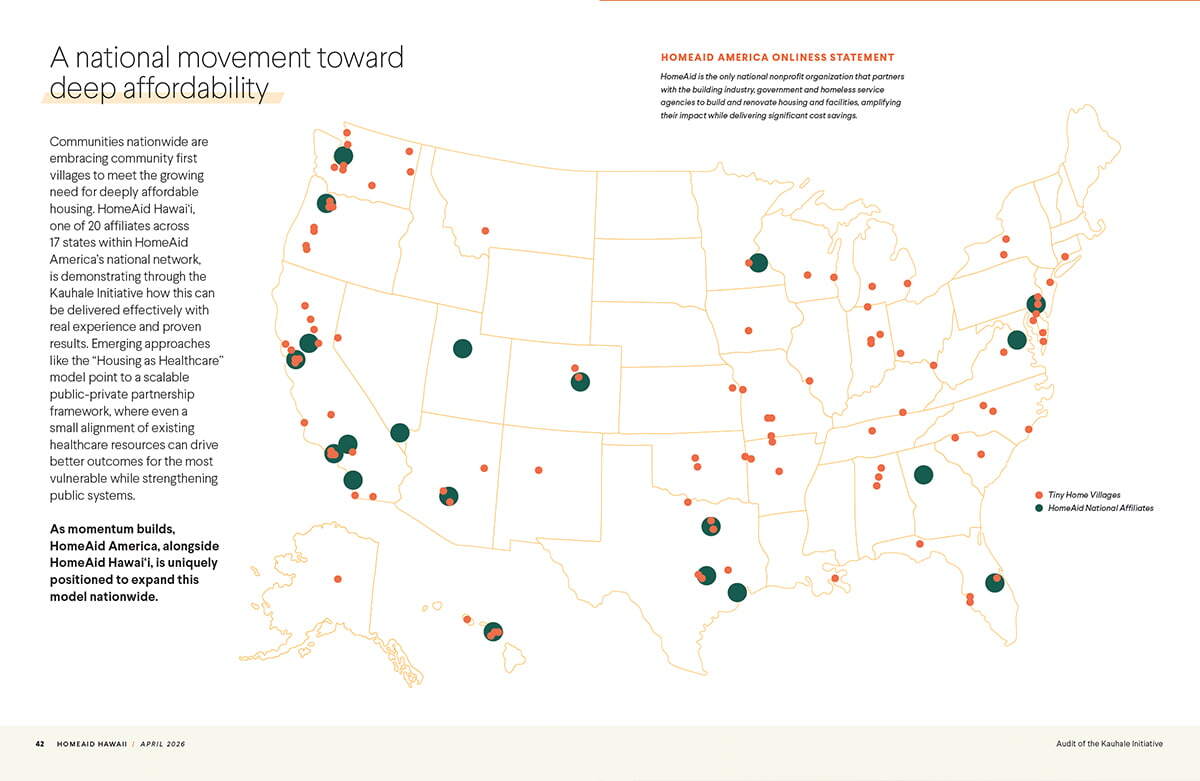
The State of the Kauhale Initiative report provides a public-facing baseline for understanding the Initiative’s purpose, performance, risks, and future opportunities as Hawai‘i continues addressing its housing crisis.
Prepared ahead of the legislatively required 2026 audit under Act 309, the report was created to support transparency, strengthen shared understanding, and complement upcoming legislative oversight findings.
VIEW FLIPBOOK | DOWNLOAD REPORT
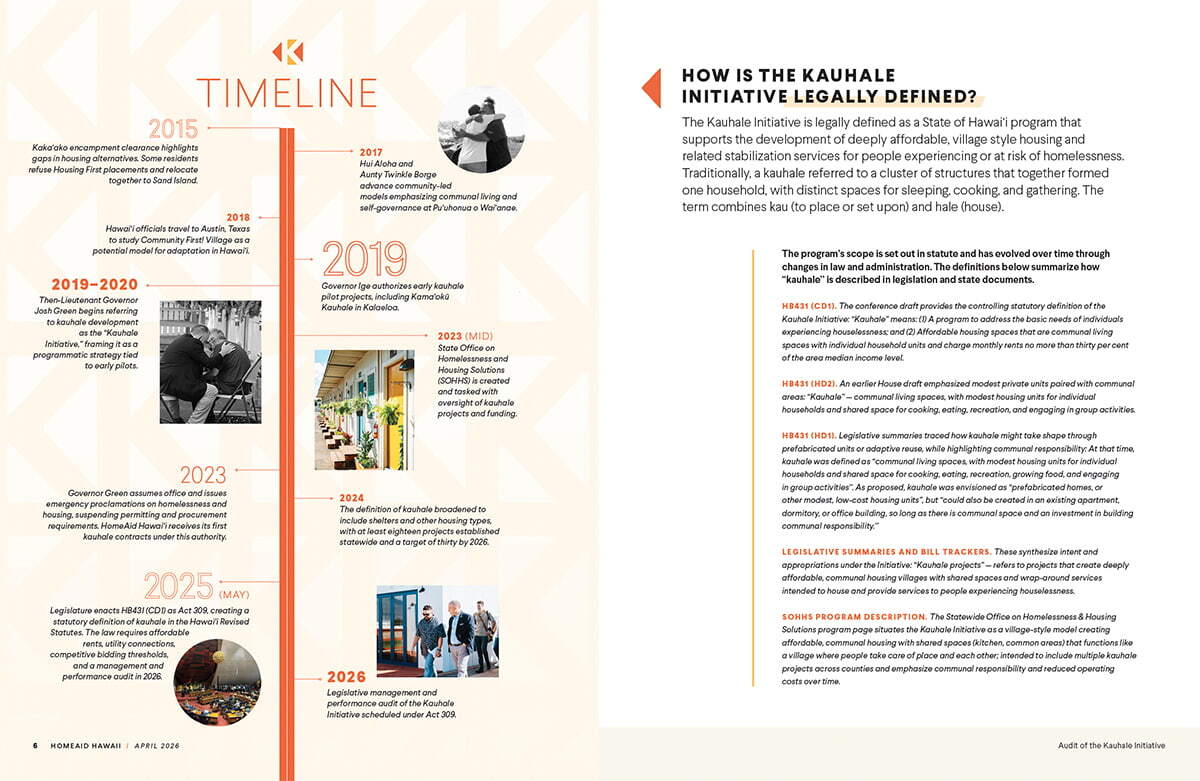
1. Legislative oversight created clearer expectations
Act 309 clarified definitions, strengthened reporting requirements, and established formal evaluation standards for the Initiative across agencies and administrations.
2. Kauhale scaled faster than traditional housing
Emergency proclamations enabled deeply affordable housing to be delivered in months rather than years during a period of urgent need.
3. The Initiative evolved into a broader statewide housing strategy
The report explains how the Kauhale Initiative expanded from village-style housing into a broader portfolio that includes shelter, medical respite, bridge housing, behavioral health, and supportive housing approaches.
4. Governance and outcomes need consistency
Differences in site operations, reporting, and project types limit comparability and reinforce the need for more consistent governance and outcome tracking across sites.
5. Estimated projections show public cost avoidance
Housing stability is associated with reduced emergency care, crisis response, and justice system involvement over time, helping reduce pressure on public systems.

Deeply affordable homes needed
17,242
Estimated statewide need for housing affordable at 30% AMI and below.
Faster delivery timelines
6x
Kauhale projects delivered faster than conventional affordable housing timelines.
Construction cost reduction
72%
Lower average construction cost compared to traditional affordable housing delivery methods.
Estimated development cost savings
$44M
Estimated avoided development costs through accelerated delivery and public-private partnerships.